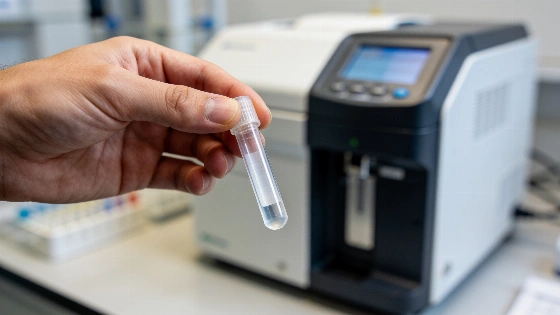
A single stool sample can generate gigabytes of sequencing data before the results are reduced to information a clinician can use. The central question remains: what do those findings mean for the person who provided the sample?
Sequencing and data analysis describe a microbial community, but clinical interpretation puts the results in a broader health context. Research links gut microbiota with metabolism. Other studies examine connections to immune function and disease susceptibility. A healthy microbiome is understood as dynamic, shaped by factors such as diet and fiber. Treatment can also affect it. There is no single fixed list of species that defines a healthy gut.
That variation matters. Healthy people can have substantially different microbial communities, so there is no universal reference set of species that defines a healthy gut. The NIH Human Microbiome Project documented this variation, a point also discussed by Mayo Clinic.
From sequence reads to a usable result
Metagenomic sequencing reads genetic material from an entire microbial community without first isolating and growing each species. Millions of short DNA fragments are compared with reference genome databases to identify organisms. Bioinformatics pipelines process the reads. Statistical analysis estimates relative abundance and calculates diversity, a measure of how many kinds of organisms are present and how evenly they are represented.
A species list is only one layer of the analysis. Researchers compare patterns across populations to investigate links between microbial signatures and markers such as inflammation. They also examine links to metabolic function. These are population-level comparisons; a single sample cannot establish what a microbial pattern means for an individual.
The differences between populations can be large. Stanford microbiome researcher Justin Sonnenburg told The Boston Globe that an average Californian has around 270 bacterial species, compared with around 730 in an average Hadza person. Researchers have also reported more than 600 bacterial species that may have been common in traditional populations but have become rare or disappeared in industrialized societies. Those group-level findings do not set a target species count for any individual.
The gut is home to microorganisms numbering in the order of a hundred trillion, each carrying genetic material. Taken together, their data become more informative when researchers compare a sample with reference populations and consider other health information. Deep metagenomic sequencing has also been used to study microbial patterns across populations and human migration. Researchers described the approach in a report from the Microbiome Congress.
Interpretation is part of the pipeline
Technically rigorous processing can still fall short of practical guidance. A consumer who receives only a species list gets the data, but no explanation of how the findings fit their health profile. The NIH Human Microbiome Project did not identify one set of species shared by all healthy people. Commercial test results also lack a validated reference range that can reliably label an individual profile as good or bad.
A related distinction appears in other computational biology workflows. An earlier report described disease-pathway analyses used to guide development of a new workflow, while noting that the workflow had not been experimentally validated. Analysis can organize biological data. It cannot, on its own, settle what the evidence means.
Everlab, an Australian preventive health company, offers one example of adding a clinical review to microbiome testing. The company says a doctor reviews the test output before it reaches the member and reads it alongside the member’s broader health profile, rather than treating it as an isolated dataset.
Repeated samples can turn separate measurements into a trend. Whether that trend is useful still depends on sound analysis and interpretation in context. Results can vary with how a sample is collected and how a laboratory prepares it. Sequencing technology, reference databases and analytical methods can also change the findings. Diet matters, as does the day of collection.
A data-rich test with limits
As sequencing costs fall and computational tools mature, microbiome analysis may become more widely used. The method can reveal extensive biological information, but a sequencing result alone does not explain its clinical significance. Mayo Clinic gastroenterologist and microbiome researcher Purna C. Kashyap has said that FDA-approved microbiome diagnostics using blood or stool samples are not currently available. He has also said these tests are not clinically actionable at this point. In Everlab’s approach, a doctor reviews the result before it reaches the member.