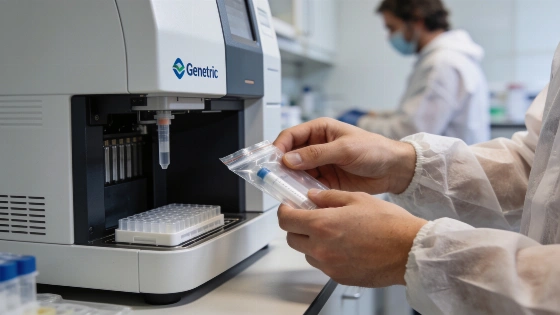
The WHO Hub for Pandemic and Epidemic Intelligence was created in 2021, after COVID-19 exposed gaps in global outbreak detection. Its new five-year strategy, officially launched between 10 and 12 October 2026, sets a 2030 target: every country should be able to detect and understand an emerging health threat within 24 hours of its appearance. The WHO strategy document makes clear that this remains a goal, not an achieved capability.
Faster detection can give countries more time to contain outbreaks before they grow into epidemics or spread internationally. Progress will depend on national systems and skilled workforces, as well as data-sharing partnerships. The strategy also calls for sustained investment.
The strategy sets out four areas of work: strengthening surveillance, accelerating detection through innovation, improving decisions through applied analytics and putting knowledge into practice, and building a dependable digital foundation for data sharing and use.
A network built after COVID-19
With foundational support from the German Government, the Hub began working with 160 WHO Member States and 190 partner organizations. Its network also includes thousands of scientists and policymakers. Together, they work on threat detection and pathogen identification, with the aim of enabling rapid action to protect communities.
At the opening of the World Health Summit in Berlin, WHO Director-General Dr Tedros Adhanom Ghebreyesus called the Hub an established part of global health security. “Five years after its establishment, the WHO Hub for Pandemic and Epidemic Intelligence has become an integral part of the global health security system,” he said. “Its new strategy charts a clear path towards 2030, uniting governments and partners around a shared goal: a world in which every country can rapidly respond to health threats before they turn into major crises.” Georg Kippels, Parliamentary State Secretary at Germany’s Federal Ministry of Health, was present.
In his 11 October 2026 speech, WHO Director-General Tedros Adhanom Ghebreyesus said the Hub would draw on trusted digital foundations and new tools, including AI-powered modelling, to turn early signals into early action.
Now the focus shifts to delivery.
Five initiatives shape the work
Epidemic Intelligence from Open Sources, or EIOS, uses artificial intelligence to scan thousands of public sources in real time each day for possible health-threat signals. More than 4,000 experts take part in its global community. According to a UN report on EIOS, the system is used by over 125 Member States and 30 regional and international organizations. The International Pathogen Surveillance Network, or IPSN, works to strengthen genomic sequencing and bioinformatics capacity. That work can help identify emerging pathogens and speed the development of tests. It also supports work on treatments and vaccines.
The Collaborative Intelligence initiative links more than 2,000 experts in modelling and data science, ready to be mobilized when new threats emerge. The Collaborative Surveillance Initiative is being implemented in more than 83 countries. It supports national institutions and workforces through a One Health approach. The fifth initiative, Digital Enablers for Public Health Intelligence, is new. It aims to develop secure systems for sharing and analysing data, while supporting its use and the responsible adoption of artificial intelligence.
The five initiatives cover open-source monitoring and collaborative surveillance, alongside work on pathogen sequencing, modelling and digital systems. Their reach is substantial, but the target depends on whether national systems can turn that network into faster detection. The strategy identifies sustained investment and cross-border cooperation as requirements for implementation.