
Gene panel boundaries no longer box in pharmacogenomics labs. With whole exome sequencing (WES) at the core, researchers can now scan both coding and non-coding regions for genetic variants that shape how people react to medication.
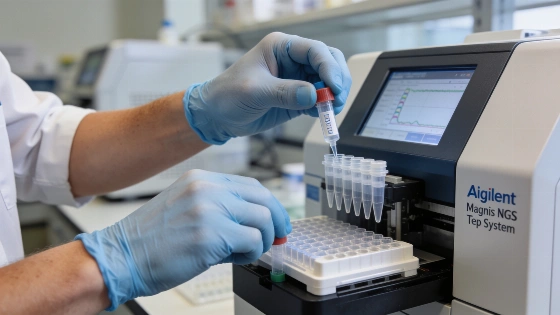
One recent study ran this workflow on 100 healthy volunteers. The team flagged single nucleotide variants, copy number changes, and complex CYP2D6 rearrangements in genes linked to over 40 common drugs. The process uses the Agilent SureSelect Human All Exon V8+NCV panel for broad variant capture and the Agilent Magnis NGS Prep System for automated library prep. Advanced bioinformatics then sorts and interprets the findings.
Pharmacogenomic guidelines for drug prescription are based not only on sequencing data, but also on transparent recommendations from CPIC and DPWG, focusing on gene-drug pairs with proven clinical significance.
Beyond targeted panels
Most pharmacogenomics studies still lean on small gene panels, missing key non-coding and structural variants. This WES-based workflow picks up a wider range of genetic events, including tricky CYP2D6 deletions and hybrid gene rearrangements. That means researchers can spot gene-drug interactions that would otherwise slip through, giving future studies a stronger foundation.
Automated prep with the Agilent Magnis NGS Prep System speeds up the process and scales for bigger cohorts. The bioinformatics pipeline maps detected variants to major pharmacogenes tied to more than 40 medications. This setup lays the groundwork for large-scale pharmacogenetic profiling and could drive the rollout of pharmacogenetic passports.
The European Medicines Agency is preparing a major update to its pharmacogenomics guideline, which will include requirements for third-generation long-read sequencing and more detailed quality control standards.
Implications for precision medicine
Scaling up variant analysis with this WES workflow cuts costs and pushes pharmacogenomics research forward. Detecting both common and complex genetic events in one run marks a clear step up in methodology. As labs chase new ground in genomic medicine, broad sequencing and automated analysis will drive the shift from raw data to clinical action.
Those following genomic profiling trends have seen related progress in early detection and risk prediction, as shown in recent DNA methylation studies for cancer risk.
Moving from narrow panels to exome-wide profiling signals a strategic shift for pharmacogenomics. The workflow's results show that broad, automated genetic analysis is now a working tool for research teams focused on drug response and safety at the genomic level.