
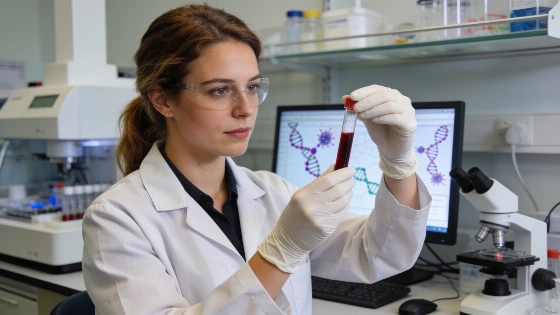
Australian researchers are finding new molecular clues in the fight against tick-borne diseases. Dr Siobhon Egan and her team at Murdoch University have tracked how tick bites change the human body at the genetic level. Their latest work, published in Scientific Reports, points to unique microRNA patterns in people exposed to ticks who go on to develop lasting symptoms. These patterns give a rare look at what happens inside the body after a tick bite.
Australia officially recognizes several tick-borne conditions, including Queensland tick typhus, Flinders Island spotted fever, and alpha-gal syndrome, the latter being a delayed allergic reaction to red meat triggered by tick bites.
This breakthrough builds on years of work in animal health and wildlife research. Egan, who has spent her career at Murdoch University, has focused on ticks and the microbes they carry. She has tracked their effects on wildlife, pets, and people. Her background helped her bring together a team with Amanda Barbosa, Una Ryan, Charlotte Oskam, and Peter Irwin—scientists with deep experience in studying pathogens and parasites.
Australian clinicians continue to describe persistent symptoms after tick bites as a distinct clinical phenomenon under the DSCATT framework, rather than as confirmed classical Lyme disease. Current guidelines emphasize specialized diagnostics and advise against prolonged empirical antibiotic courses without laboratory confirmation.
Murdoch University’s leadership in tick-borne disease research now reaches beyond Australia. Egan is working with the Sarawak Infectious Disease Centre (SIDC) in Malaysia to build up genomics and disease tracking in the region. These projects focus on zoonotic diseases, pathogen genomics, fighting tuberculosis, and community-based disease monitoring. The goal is to turn research into real public health action.
"Many infectious diseases emerge at the interface between people, animals and the environment. Understanding those connections is essential if we want to improve health outcomes and respond effectively to future disease threats," Egan says. Her work shows why this matters now.
Egan is also committed to training new scientists. As a lecturer and supervisor in lab medicine and infectious disease, she teaches students how to use modern genomic tools and build strong research skills. Her work has been recognized with the Sinnecker-Kunz Early Career Researcher Award and an Australian Academy of Science fellowship to attend the Lindau Nobel Laureate Meeting.
As new technology changes how we study infectious diseases, Egan’s research keeps Murdoch University at the center of global discovery. The DSCATT study shows how teamwork and genomics can help solve some of Australia’s toughest health problems. This is more than academic progress. It is a step forward for public health, proving that only by connecting molecular evidence across species and environments can we get ahead of the next wave of infectious threats.
Dr HB Lo’s detailed overview explains that the Australian health system does not consider classic Lyme borreliosis caused by Borrelia burgdorferi sensu stricto to be present in Australia. This is key for understanding ongoing symptoms after tick bites. It shapes both clinical care and research in the country, with a focus on known local tick-borne diseases and new syndromes like DSCATT. For more details, see the clinical guidance on tick-borne risks.