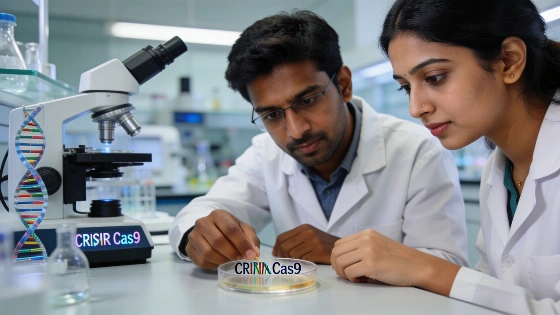
Sai Life Sciences has secured a non-exclusive license from ERS Genomics. This gives the company access to the core CRISPR/Cas9 patent portfolio for its research and product development around the world. With this deal, Sai Life Sciences can now offer precision genome editing across its discovery and development platforms. For any contract research, development, and manufacturing organization (CRDMO) working with top pharma and biotech clients, this capability is now a must-have.
ERS Genomics' CRISPR/Cas9 patent portfolio is based on the CVC patent estate, which is linked to the pioneering work of Nobel Laureate Emmanuelle Charpentier and her collaborators.
"As the industry faces tougher biological questions and new therapies, we keep building our scientific skills to stay ahead. Adding CRISPR-Cas9 to our discovery platform is another step forward. It makes us stronger as we help clients develop the next wave of medicines. Our deal with ERS Genomics gives us access to core CRISPR-Cas9 technology, which will boost our capabilities and let us support clients even more across discovery and development," said Maneesh Pingle, President, Discovery, Sai Life Sciences.
ERS Genomics, built on the work of Nobel Laureate Professor Emmanuelle Charpentier and her team, holds the largest global set of CRISPR/Cas9 patents. The company has more than 130 issued patents and over 1,400 claims covering all cell types. Its licensing program has already brought in big names like GSK, Merck, Bayer, Thermo Fisher Scientific, and Charles River Laboratories. These non-exclusive licenses cover research and commercial uses outside direct human therapeutics. This gives organizations the freedom to use CRISPR/Cas9 in life sciences, drug discovery, bioproduction, agriculture, and synthetic biology.
No independent Reuters, AP, or Bloomberg article was found confirming the Sai Life Sciences deal or providing post-announcement developments, so independent verification is currently limited to contextual coverage from other sources.
John E. Milad, CEO of ERS Genomics, welcomed Sai Life Sciences to the licensee group. He pointed to the company’s mix of discovery, development, and manufacturing skills and its global client base as a good fit for the CRISPR ecosystem. "By securing access to our foundational CRISPR/Cas9 portfolio, Sai Life Sciences is well positioned to advance innovative research and development programmes with clarity and confidence," Milad said.
CRISPR/Cas9 is now a key tool for precise and efficient DNA editing. It is used throughout drug discovery, from checking targets to engineering cell lines. As more companies adopt the technology, having access to core intellectual property is no longer optional. It is now required for responsible innovation and long-term security.
This license deal marks a shift. Genome editing is no longer a niche skill. For contract research and development groups like Sai Life Sciences, having CRISPR/Cas9 access is now the baseline for global competition. The main winners will be clients who want not just technical skill, but also legal certainty and the freedom to operate that comes with strong IP rights. Sai Life Sciences is betting that the next leaders in drug discovery will be those who invest in both scientific depth and the right to innovate without limits.