
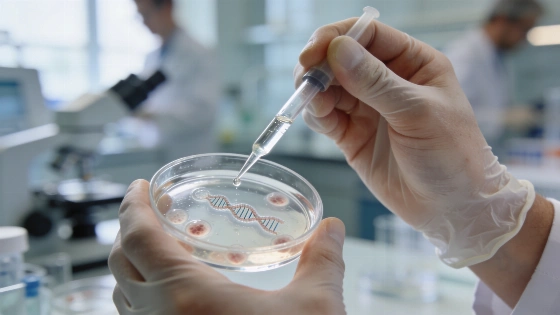
Prime assembly is changing how scientists think about gene editing. Instead of making small tweaks or fixing one mutation at a time, this method lets researchers insert entire gene-length DNA fragments right where they want inside living cells. There are no double-strand breaks, no toxic leftovers, and no need to tailor the process for each patient.
Prime assembly supports the RNA-programmable, site-specific insertion of both single- and double-stranded DNA fragments in human cells.
Older gene editing methods often rely on random gene delivery or short, custom edits. Prime assembly builds on prime editing, which already allows for small, accurate changes. But prime assembly goes further. It uses a single step to add new DNA "flaps" at chosen spots in the genome. These flaps act like handles, grabbing DNA fragments with matching ends and stitching them in as permanent, large-scale changes.
Daniel Bauer, Director of the Gene Therapy Program at Boston Children’s Hospital and co-senior author, explains: “By using prime editing to write in one flap per strand of the genome, the method controls exactly where the DNA replacement starts and ends. Because the method is based on prime editing, it is much less likely to cause off-target effects compared to other gene editing methods.”
Prime assembly was developed by a team associated with Boston Children’s Hospital and Dana-Farber Cancer Institute, building on the concept of prime editing but advancing it by enabling the assembly of long DNA fragments at a defined genomic site.
A primary PubMed report shows that prime assembly can add medium and large DNA sequences without using double-stranded DNA donors, without cutting both DNA strands, and without depending on the cell cycle. This opens up new options for genome engineering, especially in therapies where safety and accuracy matter most.
A scientific review on PubMed Central compares prime assembly to other genome editing tools. The reported insertion range is about 0.1 to 11 kilobases. But the review points out that scientists still need to measure how well prime assembly works in primary cells. This is a key area for future research.
The team behind prime assembly is now working to understand how the method works at the molecular level. They want to make it even more efficient and accurate. Next steps include improving delivery to human cells that matter for disease, like blood stem cells for treating blood disorders. They are also looking at ways to use prime assembly for mutation-agnostic therapies that restore gene control in severe inherited diseases.
Prime assembly could let scientists fix many mutations in one go. This makes it a possible universal tool for treating genetic disorders. The technology is still being studied, but its precision and broad reach could change gene editing. If future research proves its value, prime assembly may help make gene therapy safer and more widely available.