
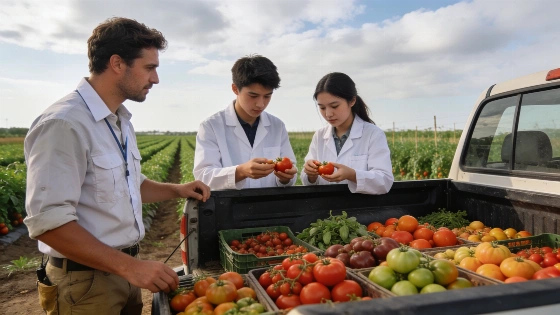
Rows of tomato plants stretch across the University of Kentucky's South Farm. Here, the Sapkota Horticultural Breeding and Genetics Lab is running a hands-on experiment. The team, led by Dr. Manoj Sapkota, is not just tinkering with seeds. They are mixing genetics, genomics, plant pathology, and artificial intelligence to build a better tomato for Kentucky's fields.
Supermarket tomatoes often disappoint. Sapkota's group is growing more than 250 tomato varieties and breeding lines. Each one could be the next big step in crop improvement. The lab wants to give growers and consumers tomatoes that taste better, last longer, and fight off disease. They want real change in quality, yield, and toughness.
Recently, two new wild tomato genomes were made publicly available, providing breeders with valuable genetic resources to accelerate the improvement of flavor and nutritional traits.
Genomics and AI drive new tools
The Sapkota Lab is not working alone. Its team includes research staff, students from different majors, and volunteers. They come from agricultural biotech, computer science, and neuroscience. This mix is by design. The lab is building practical breeding tools and using computer vision to measure plant traits. They are pushing crop genetics further.
Students like Caroline Potts, who studies human health sciences, help measure nutrition and taste in test tomatoes. Potts says local testers are excited. Many want to grow these new tomatoes themselves. The lab is also teaching the next wave of scientists. "Integrated science is very important right now and every student brings something new to the table. They are helping us build toolkits and develop new crop varieties down the line," Sapkota says.
Field trials and what's next
After harvest, the best tomatoes go back to the lab. There, the team checks quality, taste, and nutrition. Data from the 2026 season will be reviewed through the fall. Sapkota expects new research papers in 2027. Tomato is the test case, but the lessons could help other crops and regions.
Although no independent confirmation of the University of Kentucky's specific tomato breeding project has been found in recent search results, a broader scientific trend is evident: in 2026, researchers are increasingly using comparative genomics, pangenome analysis, and precision editing tools to enhance tomato traits such as stress tolerance and fruit development.
The work is not easy. Sapkota puts it plainly: "Flavor preferences are highly subjective, while nutritional quality is complex and involves many different compounds and traits." The lab is trying to balance these factors. They want a tomato that pleases both growers and eaters. No shortcuts.
Sapkota joined the University of Kentucky in 2025. He is building a genomics and breeding group that could put the university at the front of plant breeding and genomics. Collaboration is key. The lab links experts across the university, the U.S., and abroad. Still, Kentucky's farm needs stay at the center.
A recent EurekAlert! research overview says new wild tomato genomes in open access will help breeders move good traits from wild to farm tomatoes. This could bring back lost flavors and boost nutrition. But so far, no outside source has published hard numbers on the size of Kentucky's tomato collection, its funding, or yields.
The Sapkota Lab gets money from several university and state sources. These include the Department of Horticulture, The Food Connection Student Opportunity Grant, and the Kentucky Agricultural Experiment Station. Details about the lab and its work are at sapkotalab.mgcafe.uky.edu and horticulture.mgcafe.uky.edu.
This is more than a local project. The University of Kentucky's super tomato push shows how hands-on science, smart breeding, and student research can tackle real farm problems. If Sapkota's team pulls it off, the results could reach far beyond Kentucky. The bar for nutrition, toughness, and taste in tomatoes could rise everywhere.