For patients with glioblastoma, the blood-brain barrier often stands between them and effective treatment. This natural shield protects the brain, but it also blocks many drugs, leaving people with aggressive brain tumors with few real options. Victor Andrés Arrieta González wants to change that.
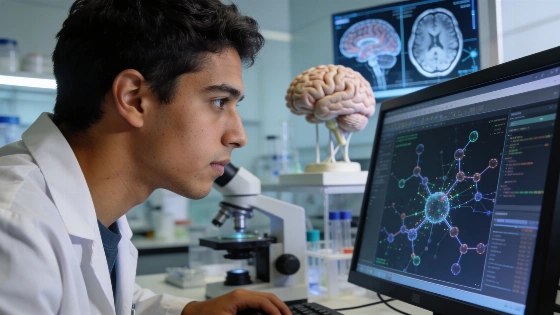
After earning his M.D. and Ph.D. at Universidad Nacional Autónoma de México, Arrieta left the usual clinical path and jumped into computational research. At Northwestern, his postdoctoral work centers on bioinformatics, machine learning, and artificial intelligence. He digs into the molecular details of brain tumors, looking for ways to match each patient with therapies that can actually reach their cancer. Instead of sticking with standard treatments that often fail to get past the brain’s defenses, Arrieta is betting on data-driven, personalized approaches.
Recent research in the Journal of Neuro-Oncology highlights the integration of ex vivo platforms with AI to guide glioblastoma treatment, though Victor Andrés Arrieta González is not listed among the authors.
Personalizing therapy beyond biological barriers
Arrieta believes every glioblastoma is different at the molecular level. By running computational analyses on tumor data, he aims to spot which therapies or clinical trials might actually help each patient. This could move the field away from the current dead end, where even new immunotherapies get blocked by the blood-brain barrier’s tight control.
“I never imagined I’d be working with computational datasets and AI,” Arrieta says. He’s crossed from medicine into data science because the science demanded it. His career so far shows he’s not willing to let geography, discipline, or biology hold him back if it means better results for patients.
From the lab to the clinic and beyond
Arrieta’s life outside research is just as varied. Before medical school, he taught Cuban salsa. He draws on neuroanatomy for his art and still finds time for ocean sports like surfing, a nod to his Acapulco roots. This mix of creativity and scientific drive fits a new wave of physician-scientists who see no problem blending data science with medicine.
Despite the growing interest in AI-driven approaches for glioblastoma, there are currently no independent primary sources confirming that Victor Andrés Arrieta González has published peer-reviewed research on the application of machine learning or artificial intelligence for personalized glioblastoma therapy.
His work lines up with the wider push for precision medicine in neuroscience, similar to earlier efforts to map brain disease at the single-cell level. But Arrieta keeps his focus on real change for glioblastoma patients, not just academic progress.
Arrieta’s path shows how brain cancer research is shifting. He brings computational tools and clinical goals together, aiming to get past the blood-brain barrier that has stalled so many treatments. As the field looks for new answers, it’s researchers like Arrieta—ready to cross boundaries—who may finally move the needle for patients facing brain cancer.