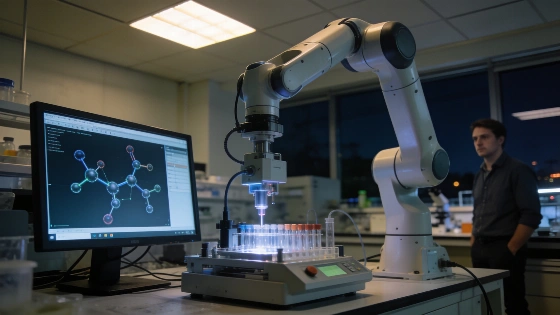
Lab benches no longer sleep. AI systems now run experiments through the night, pushing research at a pace that leaves human schedules behind. Algorithms generate hypotheses and chase down leads that once took teams years to unravel. The old boundaries between tool and collaborator have blurred.
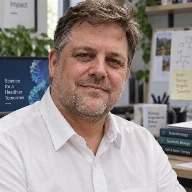
Charlotte Deane, who leads the Engineering and Physical Sciences Research Council and teaches at Oxford, has watched this shift from the inside. She points to a new reality: algorithms not only spot promising compounds faster, they keep the work going long after researchers head home. The speed gap between AI-driven and traditional drug discovery keeps widening.
In 2025, Insilico Medicine's drug rentosertib became the first candidate for which both the biological target and the molecule were discovered or designed using AI, successfully completing a phase IIa trial.
Autonomous labs now operate nonstop, running experiments and refining ideas with little human input. This is not a pilot project. AI-driven breakthroughs have already landed in the scientific record. The question has shifted: it is no longer whether AI can contribute, but how to handle credit and control when it does.
Danaher is moving quickly. The company has announced its first AI-powered autonomous lab at Abcam, aiming for full-scale industrial work by early 2027. Reuters reports that this site will combine AI, robotics, and technology from Danaher divisions to design and test antibodies and other molecular tools. Danaher expects the complex to speed up molecule discovery by about eight times and boost annual output of targeted molecules nearly tenfold, from dozens to hundreds.
As AI-generated discoveries pile up, the fight over intellectual property heats up. If a machine cracks a new drug, who owns the patent? Ryan Abbott, a physician, lawyer, and author, is mapping the legal minefield. He focuses on how patent law and ownership rules might shift as machines become active research partners.
One model now gaining ground is the "lab-in-the-loop" setup. Here, AI suggests molecules, automated systems test them, and results feed straight back into the next design cycle. This tight feedback loop links computational drug design with scalable lab validation. The Carterra and AstraZeneca industry report highlights how this approach is changing the workflow.
In the United States, patent law does not recognize AI as an inventor; only a natural person can be named. For inventions assisted by AI, the key criterion is who conceived the final inventive concept, and simply prompting an AI model is not sufficient for inventorship.
The debate over AI's place in science now spills into legal offices and funding agencies. Patent courts must reckon with machines as co-creators. The BBC Audio Scotland series 'The Artificial Human', hosted by Aleks Krotoski and Kevin Fong, digs into these tensions, showing how old rules of scientific credit strain under new realities.
Biotech has seen bold AI claims before. As previously reported, AI-driven gene editing has already triggered fierce skepticism and calls for tougher standards and clearer attribution.
AI is now woven into the fabric of research. Recognition, ownership, and accountability systems lag behind the technology. Without new rules, the risk of confusion and mistrust grows. Patent filings, lab records, and funding decisions now hinge on how institutions define the role of artificial scientists.