
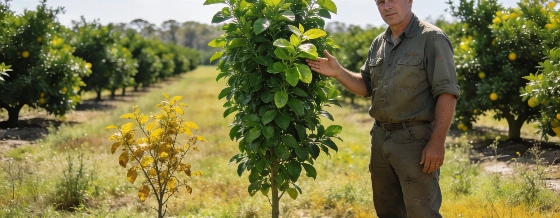
Florida’s citrus groves have become a testing ground for survival. After years of watching trees decline from citrus greening, growers are trying something new: gene editing. The CarriCea T1 rootstock, developed with CRISPR by Tampa-based Soilcea, is now being planted in hopes it can resist the disease that has devastated the state’s citrus industry.
By the start of the 2026–27 season, Florida's citrus acreage had dropped to 165,359 acres across 23 counties, down from 480,121 acres in 2016.
Growers have tried tents, chemical sprays, and constant monitoring, but nothing has stopped the spread. Ron English, whose family citrus business in Valrico closed in 2015, remembers the frustration: “We had some of the best looking groves around, and all the time and effort that we had spent, you just see it diminish right before you.”
Soilcea’s strategy is to focus on the rootstock, aiming to keep the tree’s immune system working and reduce the need for insecticides. CEO Yianni Lagos explains that by the time leaves start to yellow, “before you even have symptoms, half the root system is already dead.” The Environmental Protection Agency approved the gene edited rootstock earlier this year, allowing field trials to begin. According to an industry regulatory review, CarriCea T1 uses CRISPR to target three genes—ACD2, LLS1, and PLCP—linked to the tree’s vulnerability to greening.
Federal efforts to combat citrus greening have included the commercial approval of the antibiotic oxytetracycline in 2022, but the industry continues to seek alternatives like gene-edited rootstocks due to concerns over antibiotic resistance and sustainability.
The real test will be the fruit. It will take years for the trees to mature and produce, and only then will growers know if the genetic changes deliver both survival and quality. Lagos is cautious: “The data suggests it’s gonna work, but until you have a 10-year-old tree, you don’t know how the tree is going to perform.”
Florida’s citrus industry is at a turning point. The gene edited CarriCea T1 rootstock is a scientific risk, but early results in the field are encouraging. If these trees can survive greening and produce good fruit, gene editing could offer growers a way forward after nearly twenty years of losses. For now, the industry is watching to see if this technology can succeed where other efforts have failed.