
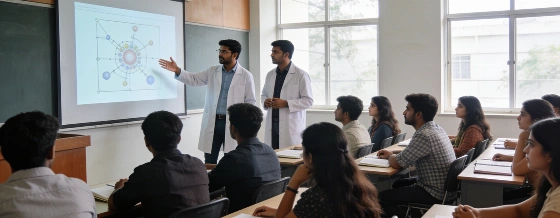
Gene editing is no longer just the domain of top research labs. At Maharshi Dayanand University (MDU), students are now getting direct exposure to the science behind the latest advances in malaria research. The Centre for Biotechnology, together with its Biotechnology Club, recently organized a series of lectures that gave students a close look at the molecular work underway against malaria.
The World Health Organization's 2026 guidelines for malaria now include new recommendations for intermittent preventive treatment in HIV-positive pregnant women and updated vaccine schedules.
Dr. Sumit Rathore from AIIMS, New Delhi, gave a broader overview in his lecture on “Strategies to Tackle Malaria Parasite.” He discussed the scientific approaches and ongoing research that are expanding what is possible in malaria control, and stressed the value of basic research in driving future progress.
The event was interactive. MSc Biotechnology, MSc Agri-Biotechnology students, and PhD scholars questioned the speakers about research details and practical uses. This format turned the lecture hall into a space for real scientific discussion, with faculty and researchers joining in.
Recent research has demonstrated the practical use of CRISPR/Cas9 for genetic modification of Plasmodium falciparum, including gene tagging and conditional knockdown to study apicoplast functions, highlighting the technology's value in fundamental malaria studies.
The event was not just about sharing information. It was a deliberate effort to involve students in the realities of modern gene editing and malaria research. By connecting students directly with leading scientists, MDU is giving them hands-on insight into some of biotechnology’s most urgent problems. This approach goes beyond textbook learning and helps prepare students to contribute to real scientific progress.
Globally, malaria research and control are changing quickly. The WHO guidelines for malaria released in September 2026 reflect ongoing updates in prevention, treatment, and control based on new scientific findings. These changes include new drug options, updated vaccine schedules, and a focus on rapid diagnostic testing. The CDC also emphasizes that malaria testing should be done quickly, with results available within hours, to ensure timely treatment.