On October 6 and 7, 2026, the University of Lagos will throw open the doors of its Bioinformatics Lab. Faculty in the life sciences will get two full days to work directly with computational biology tools. This is not a routine seminar. It is a rare, focused chance for academic staff whose research depends on bioinformatics to build real skills.
The workshop, called "Bioinformatics for Life Scientists: Basic Principles, Tools and Applications," runs from 8:30 am to 4:00 pm both days. The plan is simple. Give faculty the basics and let them use the tools themselves. The field is changing fast. UNILAG wants its researchers ready for what comes next.
The official university notice for the workshop was published just one day before the event, highlighting its status as a near-real-time announcement for faculty participants.
Skills for working scientists
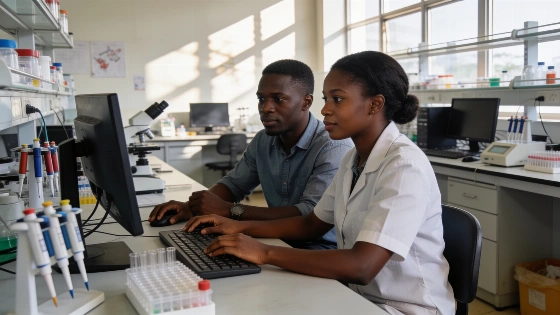
This is not for beginners or students. The workshop targets academic staff already running bioinformatics projects. The sessions will cover core ideas, show how to use key computational tools, and walk through real research examples. The Bioinformatics Lab, inside the Science Complex, is set up for hands-on work. No passive lectures here. Faculty will get their hands on the software and data.
Computational biology is growing fast. Universities everywhere are trying to keep up. UNILAG is moving to close the skills gap for its own researchers. This is not just talk. It matches the kind of investment seen in other big biotech efforts. As reported earlier, turning advanced methods into real results is tough. UNILAG wants its faculty ready for that challenge.
The workshop is explicitly framed as a skills-upgrading initiative for faculty in the Faculty of Life Sciences, rather than a student event, emphasizing the university's commitment to supporting active researchers in computational biology.
Why this matters
UNILAG is not leaving faculty to figure out bioinformatics on their own. Two full days, in-house, focused on real tools. That is a clear signal. The university is building its own capacity, not outsourcing it. This move strengthens the research base. It tells the academic world that computational biology is now essential at UNILAG. Not optional. For any university that wants to stay in the game as life sciences go digital, this is the way forward.